
After a century in the shadow of Mount Rubidoux, Flabob Airport is making its move as a community destination
Words: Ken Crawford Photos: Julian Jolliffe
By nine in the morning Flabob Airport is already hours into a busy day. Smokey Steve has the barbecue going. A DJ is set up near the hangars. Docents are in position throughout the museum exhibits, ready to walk visitors through aviation history stretching back to the early days of flight.
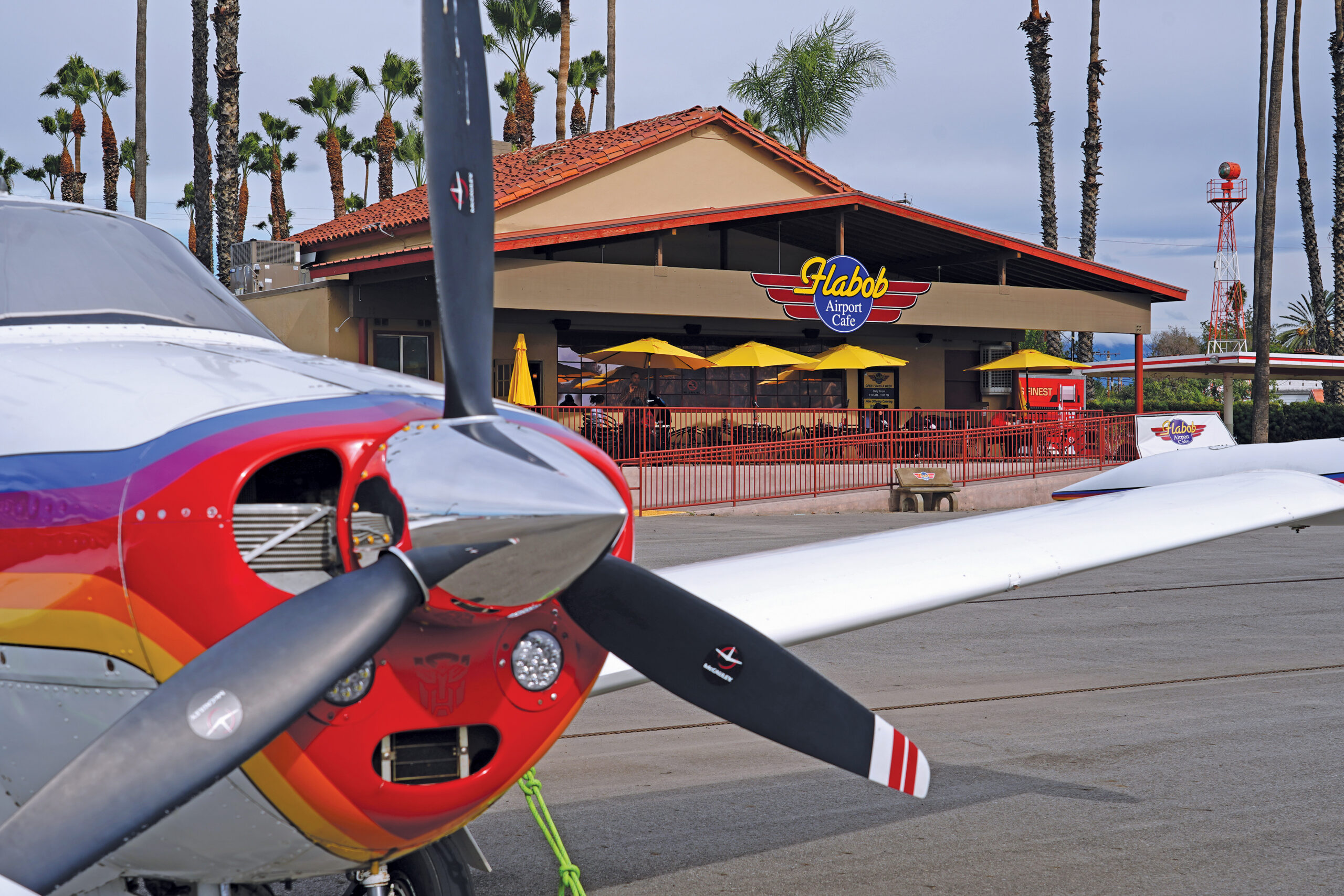
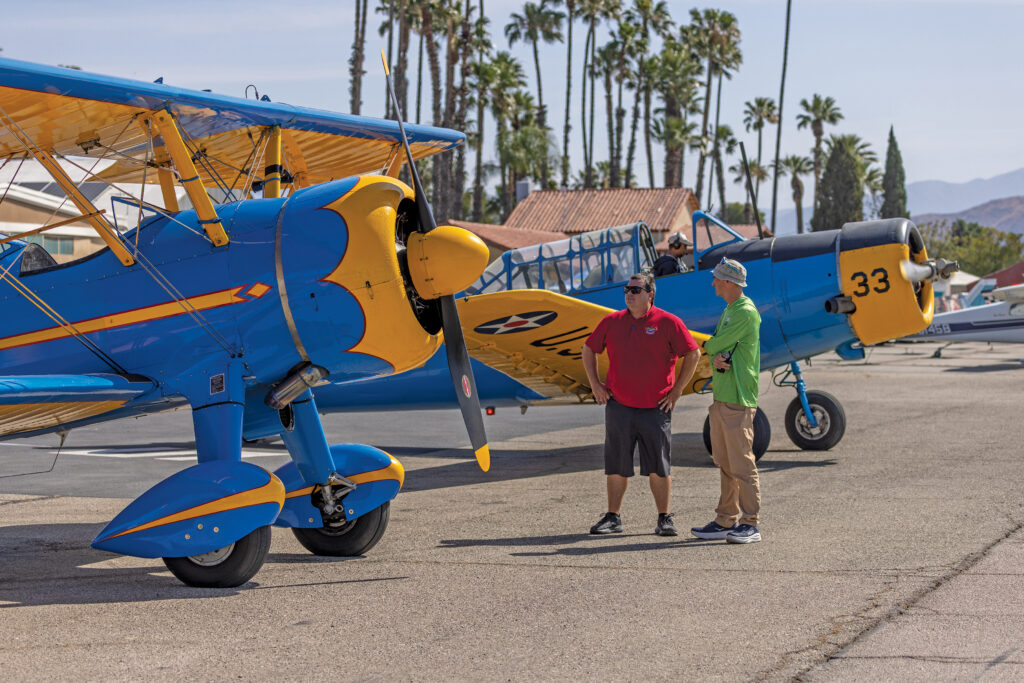
Out on the flight line, vintage and classic aircraft sit in the sun below Mount Rubidoux, the DC-3 among them. This is Display Day. Every third Saturday it goes like this, eight to noon, and the cafe tables have long since pushed past the building and the patio and around the corner to tarmac level, where nobody minds when the DC-3 fires up, drowns out the small talk and rolls toward the runway.
Over the River
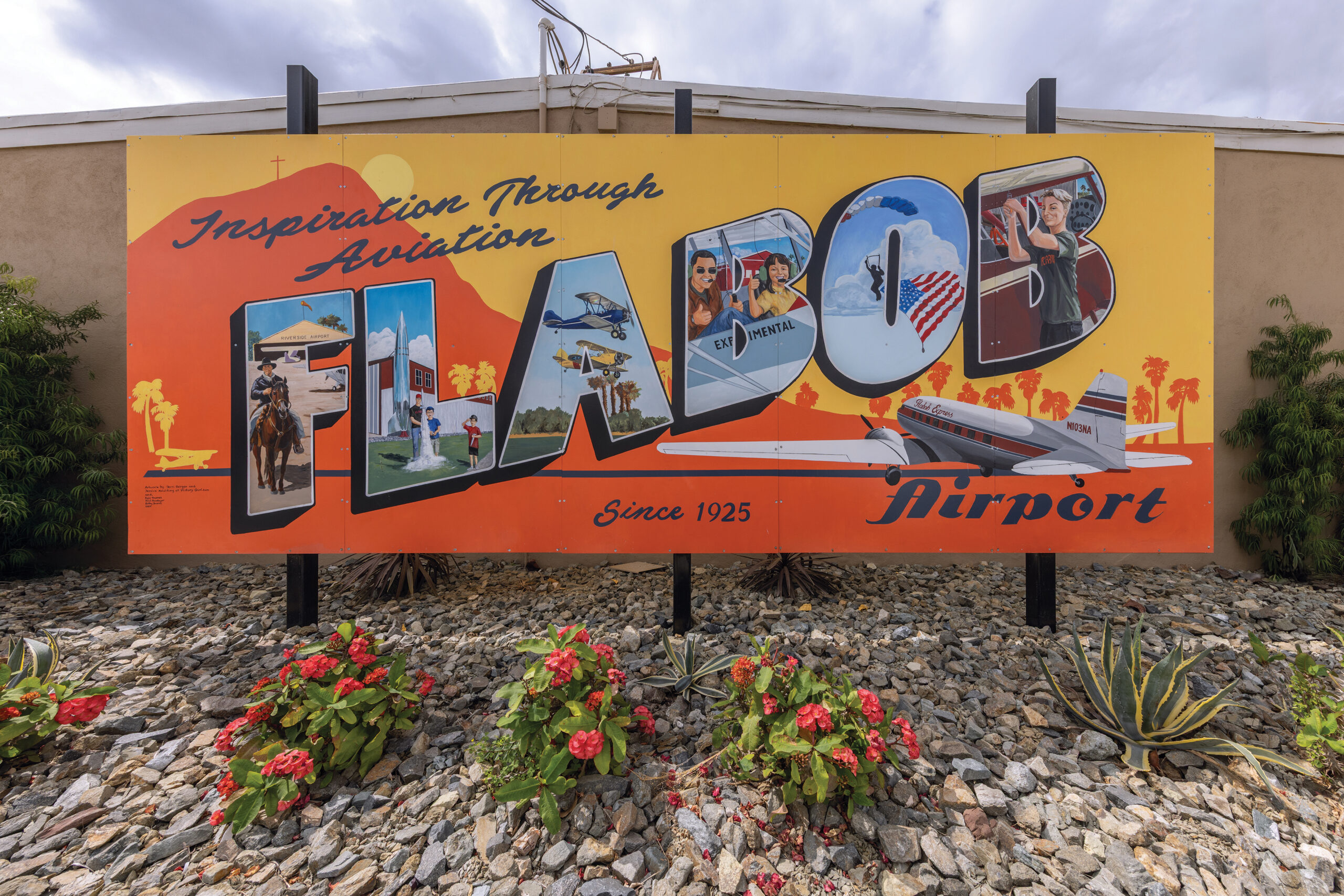
Flabob Airport turned 100 last year, putting it among a handful of general aviation fields in the United States still operating on their original ground. Flavio Madariaga and Bob Bogan established it in 1925, combining their first names, on a flat stretch of land along the Santa Ana River in what is now Jurupa Valley.
Riversiders know the city was only incorporated in 2011, which means Flabob was there nearly nine decades before the city around it had a name. Aviation itself was barely older than the airport. The Wright Brothers had flown at Kitty Hawk just twenty-two years earlier.
What grew up around that airfield over the next century was something the founders could not have anticipated. Flabob became a gathering place for pilots, builders, and enthusiasts. Stunt pilots flew out of it. Movie pilots called it home. In 1953, a group of aviation enthusiasts meeting at Flabob founded EAA Chapter 1, the first chapter of what would become the Experimental Aircraft Association, now with more than 1,000 chapters worldwide. Chapter 1 is still there. When Tom Wathen stepped in around 2000 to save the airport from developers, he preserved a piece of aviation history that most Riverside residents didn’t know they had.
The airport is thriving, but for a long stretch it stayed quiet, tucked against the river, known mostly to pilots and a small orbit of regulars. The cafe was low-key. The hangars hummed with private work. Suburban sprawl grew up around Flabob without particularly noticing it.
Flabob has struggled to engage the community. The offerings are there. To those in the know, Flabob offers an enclave, a small town of makers and doers. There was a real treasure emerging but many of the people on the Riverside side of the Santa Ana didn’t know the airport existed…until Leimamo Taylor took over the cafe. The current version of the Flabob Cafe may be the best reason to cross the river since Gay and Larry’s closed.
Taylor also runs the cafe at Riverside Municipal Airport. She is the kind of operator who stops at every table even when the room is full. You can hear her laugh from across the cafe.
“She’s done some wonderful things over there,” airport manager Coleman Fait said. “It’s just been amazing to see the difference.”
The cafe itself hasn’t changed much and that’s the point. A big stone fireplace anchors the room. Dark wood, aviation photographs and artifacts cover the walls. It is small, the kind of place that fills up fast and feels full even when it isn’t. Leimamo Taylor didn’t gut it. She upgraded the menu and tightened the operation and left the patina alone. The room looks like it has been there forever because it has.
The difference is easy to measure. The cafe has pushed past its walls, past the patio, and out onto the tarmac, where tables sit at runway level with a view of the flight line. Taylor’s role at Flabob extends beyond the kitchen. She is involved in events and programming, including Display Day, as part of a broader effort to put the airport back on the map.
“Having Leimamo part of the team was just a home run,” Fait said. “The stuff she brings with her is in the direction we’re already heading.”
Through the Roof
“We kind of call ourselves an educational campus with a runway,” Fait said.
The programming backs that up. “The kids didn’t build the airplane,” he said. “The airplane built the kids.”
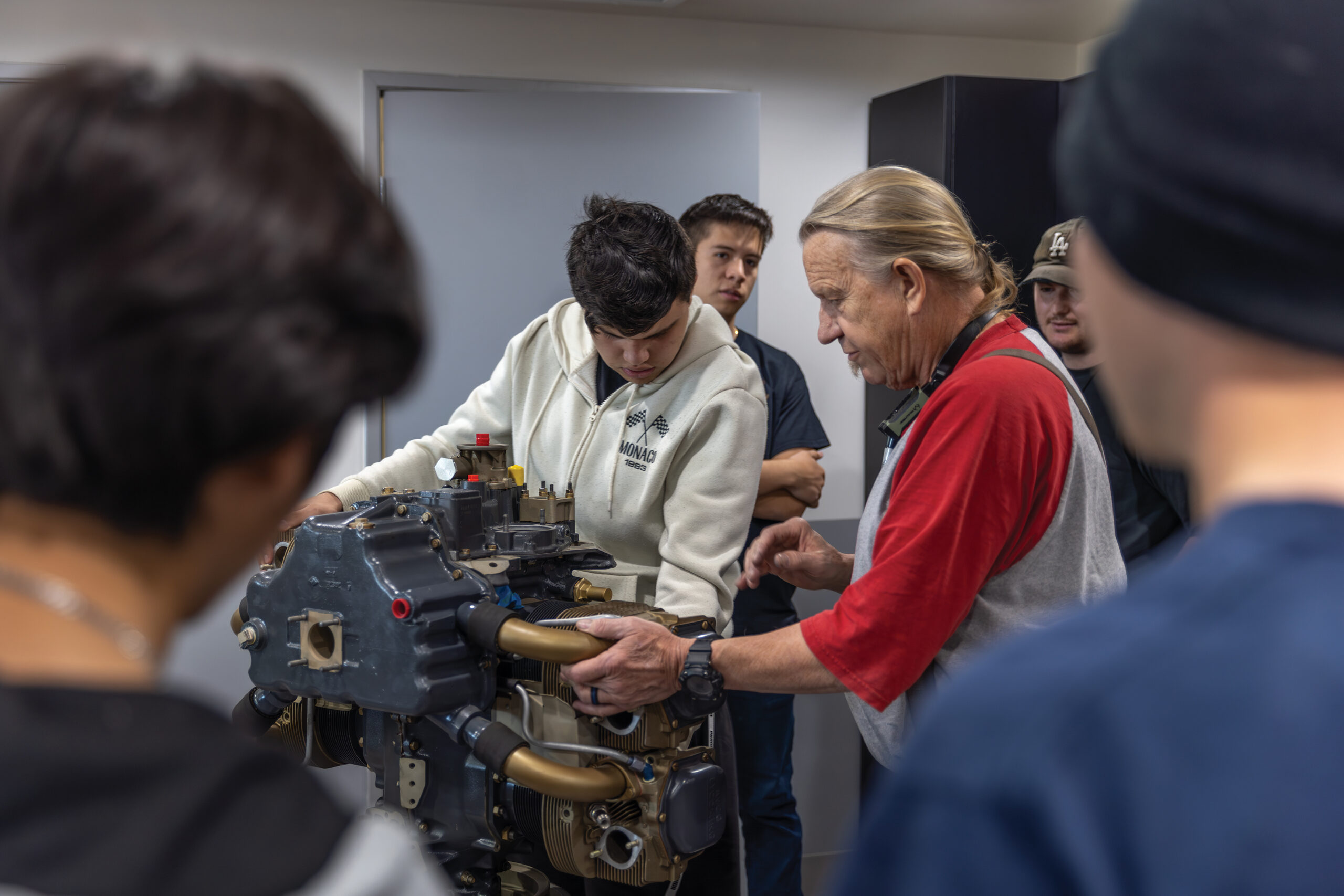
Inside Flabob’s more than 120 hangars, that plays out in practical terms. The Spartan School of Aeronautics trains aircraft mechanics in the large hangar with the checkerboard roof. Flabob Airport Preparatory Academy, a free charter school, runs junior high through high school on the grounds. The Big Red Barn program runs every Saturday, volunteers teaching kids to rivet, tear down engines and reassemble aircraft.
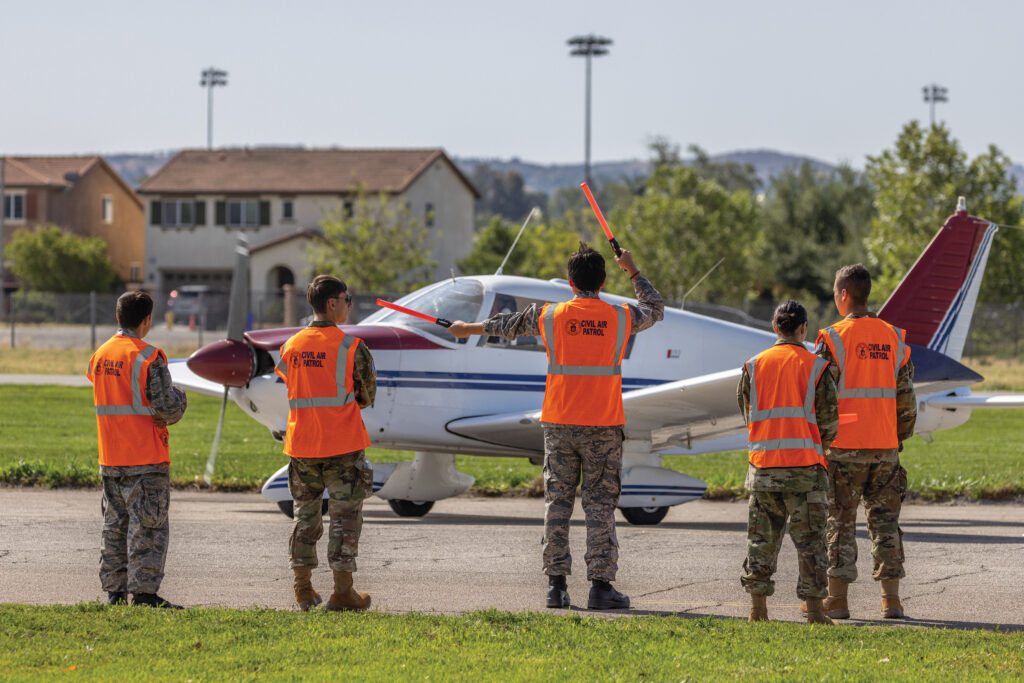
The Rocket Program, in its fourth year, draws top collegiate rocket schools to an annual symposium, including USC, Caltech, Purdue, Georgia Tech and the Air Force Academy. EAA Chapter 1’s Young Eagles program puts kids in actual aircraft the first weekend of every month. The Civil Air Patrol rounds out the youth programs, serving as a pipeline into the military for interested students.
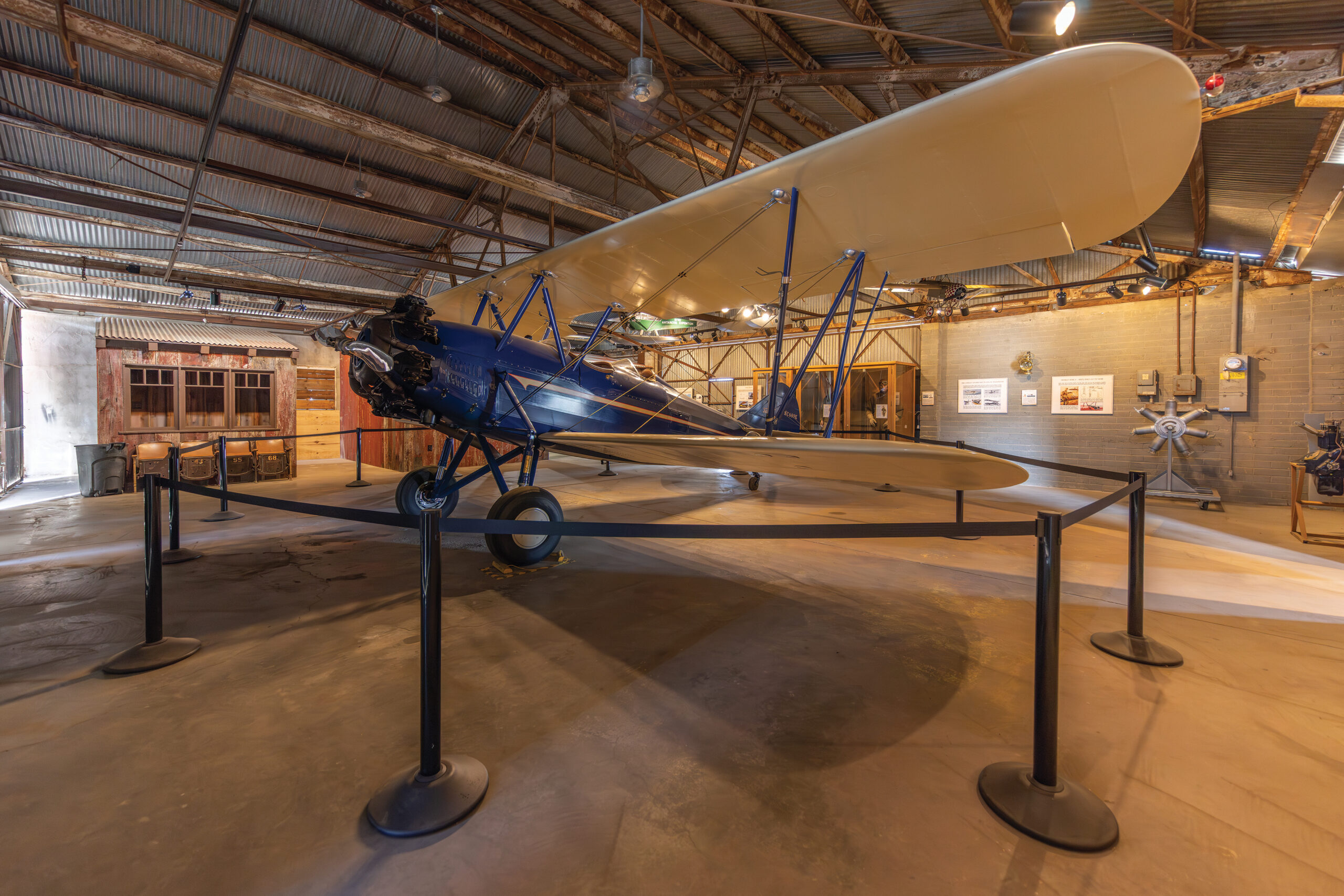
The hangars also house aircraft restoration shops, auto builders, a company called Bombs Away that makes fiberglass props for film productions, and Flabob Aero Engines, a new shop focused on keeping the radial engine in production, one of only a handful in the country. Along the flight line, Fait is developing Museum Row, a chronological exhibit running from a Wright Flyer replica through the Cold War jet era, with docents opening the hangars on Display Day each month.
The first stop is a full size replica of the Wright Brothers’ original aircraft, displayed in a hangar filled with period tools and bicycles, a nod to the Dayton shop where Orville and Wilbur built their first machines before anyone believed flight was possible. Tom Wathen’s passion for vintage air racing is preserved nearby in the Tom Austin Racer Museum, home to replicas of 1920s-era racing aircraft including the Pesco Special.
“Eventually,” Fait said, “we’re going to turn it into Disneyland here at Flabob.”
That ambition is grounded in something Flabob has always done well. The airport has long been a place where people with an idea and not much else could find room to work. Fait sees that as central to the mission. The hangars today house startups alongside established operations, small businesses getting their footing in spaces that have sheltered builders and tinkerers since the beginning. It is the same instinct that brought Madariaga and Bogan here in 1925, and it is the thread that connects the founders to the charter school students, the rocket teams, the Saturday morning mechanics, and the families sitting at tarmac level watching the DC-3 taxi past their breakfast. Flabob has always been a place where people show up to make something. The community is just now being invited to watch.
A car show is coming this summer. Veterans Day in November is the airport’s largest annual event. In May 2027, Flabob will host the inaugural Flying Circus, a fly-in targeting antique aircraft that could draw between 50 and 200 planes for the weekend.
Flabob is an important part of Riverside history. With an ambitious plan and a great group of people running the show, it’s likely that Flabob will have a role in the future; not just as a nostalgic reminder of the past but as an active economic generator and a community entertainment hub.
Next time you see a small plane buzz the top of Mount Rubidoux, follow it to Flabob for a club sandwich. You might learn something while you’re there.
For more info on upcoming events, please follow @flabobairport and @theflabobairportcafe
Flabob Airport
4130 Mennes Ave.
(951)683-2309
This article is originally published in The Riversider Magazine, June/July issue.